Choosing a Mobile Advertising Display supplier is not simply a matter of comparing screen sizes or asking for the lowest quote. Buyers need to understand how a display performs outdoors, how quickly it can be installed, and what support follows delivery. A bright screen may look impressive in a showroom. In direct sunlight, heat, dust, and reflections can tell a different story.
Advertising pioneer Bill Bernbach said, “The most powerful element in advertising is the truth.” His principle is useful when assessing supplier claims: request measurable specifications, clear warranty terms, and examples of completed installations. Look closely at brightness, weather protection, power use, remote content management, and spare-part availability. Small details matter. A delayed replacement panel can leave a campaign dark for days.
This guide examines leading suppliers and the factors that distinguish them, including product range, customization, manufacturing capacity, and after-sales service. It also considers how well vendors explain technical limits, rather than just showcase polished demonstrations. That distinction is easy to miss. Supplier comparisons are not perfectly objective; project location, budget, and audience shape what “best” means. Some information may also change as product lines evolve. Treat rankings as a starting point, then confirm specifications and service commitments directly before purchasing.
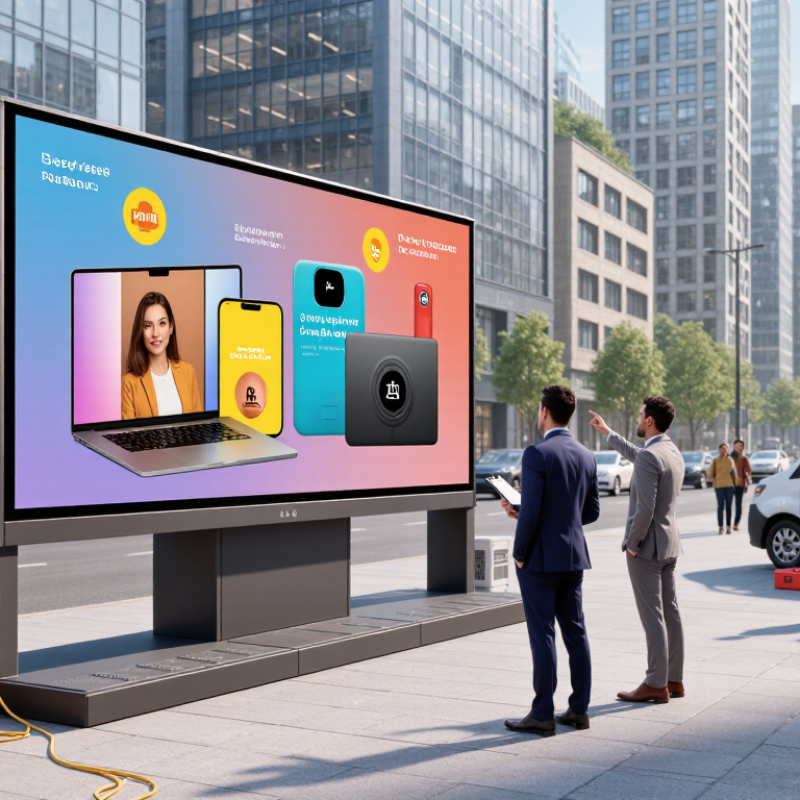
Mobile advertising displays are screens or illuminated panels carried to places where audiences gather. They may be mounted on a vehicle, built into a towable trailer, or used as portable indoor units. Unlike a fixed billboard, a mobile display can move between streets, events, and retail areas. Its value depends on visibility, location, and safe operation—not screen size alone.
A digital unit typically combines an LED or LCD screen, a media player, a power source, and a control system. A campaign file is uploaded in advance or sent over a cellular connection; the player then runs content on a schedule. Operators can adjust brightness for daylight, check playback remotely, and change messages without replacing printed panels. Simple enough. Some units also use location data to document where they traveled, though tracking quality varies and should be verified rather than assumed. In practice, glare, weather, viewing distance, and battery limits can affect results. A bright screen may look vivid at noon but overpower nearby storefronts at night. The setup is not always elegant. Buyers should ask about resolution, power runtime, service access, and proof-of-play records before comparing suppliers. A clear test along the intended route often reveals more than a polished specification sheet.
Mobile ad formats use set pixel dimensions to define the space for an ad creative. The chart compares the display area of common formats; it does not rank suppliers. In practice, an ad server selects a creative that fits the available placement.
Mobile advertising display suppliers generally fall into a few practical categories.
Manufacturers build the display structure, such as a vehicle-mounted frame, portable sign, or battery-powered screen.
Ask about weight limits, weather resistance, brightness, and replacement parts.
A unit that looks sturdy indoors may behave differently after hours in sun or rain. Details matter.
Print and display fabricators produce graphics, wraps, and interchangeable panels.
They can help match materials to curved surfaces and repeated handling, but color samples should be checked under outdoor light.
Rental suppliers serve short campaigns and events, often coordinating delivery, setup, and removal.
Confirm what the rental fee includes; transport or on-site support may be separate.
Digital display integrators supply screens, power systems, content software, and maintenance.
Their proposals can be harder to compare because hardware and service are bundled.
There is no perfect supplier category, and the distinction can blur. For a useful comparison, describe where the display will travel, how often it will be used, and who will maintain it. Then request a written specification, sample, and clear repair terms.
Choosing a mobile display supplier requires more than comparing quoted rates. Check its inventory sources, supported formats, geographic reach, and ability to serve ads across different screen sizes. The IAB and PwC’s 2023 Internet Advertising Revenue Report recorded $156.1 billion in U.S. mobile advertising revenue, about 69% of total digital ad revenue. That scale makes transparent reporting essential. Ask for sample placement reports showing impressions, viewability, clicks, and invalid-traffic controls. A polished dashboard is useful, but it cannot replace clear definitions and independently verifiable data.
Assess how easily the supplier connects with your existing ad server and analytics tools. Request realistic delivery estimates, response times for support, and examples of how it handles campaign pacing when inventory changes. Check whether targeting options rely on consented, appropriately sourced data. Also review creative specifications: a 300-by-250 display unit may render differently on a narrow phone screen. Small details matter. Some capabilities sound impressive in a sales call but prove difficult to verify; ask for a limited pilot before committing.
Tips: Compare suppliers using the same test campaign, budget, audience, and reporting window. Record setup time and any unexpected fees. Keep the scorecard simple, but leave room for judgment: the cheapest option may not be the most dependable.
Notable mobile display suppliers usually fall into three groups: panel makers, module specialists, and system integrators. Panel makers provide LCD or OLED screens in different sizes and brightness levels. Module specialists add touch layers, cover glass, and optical bonding. Integrators combine these parts with enclosures, media players, and connectivity for portable or vehicle-mounted advertising screens.
The right solution depends on where people will see the screen. A display beside a sunny street needs higher brightness and glare control. A unit carried between events benefits from a lighter housing, protected corners, and a battery that lasts through a workday. Ask suppliers for measured brightness, viewing-angle data, touch performance, and operating-temperature ranges. Sample units matter. A screen that looks crisp indoors may fade under direct sunlight.
Reliable suppliers should explain their quality checks, repair options, and expected production lead times. Ask how they test for heat, vibration, and repeated power cycling. These details reveal more than a polished product sheet. Still, specifications can be confusing, and suppliers may describe similar tests differently. Compare the actual test conditions before choosing. A clear answer is reassuring; a vague one deserves another question.
The table compares common supplier types and their mobile display offerings. It describes industry categories rather than naming individual companies or brands.
| Supplier Type | Mobile Display Solutions | Typical Inventory Access | Common Buying and Targeting Options | Potential Advantages | Evaluation Considerations |
|---|---|---|---|---|---|
| In-app ad networks and monetization platforms | Banner, interstitial, native, and other app-integrated display placements | Mobile apps connected through software development kits or mediation integrations | Campaign, audience, device, and app-context options vary by platform and available consent signals | Can provide access to app environments and formats designed for mobile screens | Check app-quality controls, placement transparency, invalid-traffic protections, and integration requirements |
| Ad exchanges and supply-side platforms | Programmatic mobile display inventory, including in-app and mobile-web placements | Publisher and app inventory offered through automated auctions or other programmatic transactions | Auction-based buying, deal-based access, and targeting subject to platform capabilities and privacy rules | May consolidate inventory from multiple participating publishers and apps | Review supply-path transparency, fees, brand-safety controls, and the level of publisher disclosure |
| Mobile web publishers and direct-sales teams | Display placements on publisher websites viewed in mobile browsers, such as banners and native units | A publisher’s own mobile website and, where offered, its directly managed inventory | Direct insertion orders or programmatic options; contextual and geographic targeting may be available | Can offer clearer alignment with a specific publication and its audience or content | Confirm mobile page experience, ad placement, audience definitions, reporting, and campaign minimums |
| Managed-service mobile media providers | Campaign planning and placement across mobile display inventory, often including banners, interstitials, or native ads | Inventory sourced through publisher relationships, exchanges, or other buying platforms | Provider-managed campaign setup, optimization, and reporting; targeting depends on the underlying inventory and data permissions | Can supply operational support for advertisers without an in-house mobile media team | Clarify service fees, inventory sources, optimization methods, and access to campaign-level reporting |
| Retail media networks with mobile properties | Sponsored display and related ad placements within a retailer’s app or mobile website | The retailer’s own mobile shopping environments and eligible advertising placements | Retailer-defined campaign options; use of shopping or purchase data is subject to the provider’s policies and applicable consent requirements | May connect mobile ad exposure with shopping-related reporting available from the retailer | Assess audience reach, placement availability, measurement methodology, and data access terms |
| Mobile demand-side platforms | Tools for buying mobile display inventory across connected exchanges and supply sources | Third-party app and mobile-web inventory available through integrated supply partners | Self-service or managed programmatic buying; audience and device options depend on signals, settings, and privacy restrictions | Can centralize campaign controls and reporting across multiple supply sources | Check supported formats, integrations, data costs, transparency, and the expertise required to operate the platform |
Availability, targeting, reporting, and buying terms vary by supplier, publisher, market, and applicable privacy requirements. Confirm current capabilities directly before purchasing.
Choosing a mobile display supplier starts with the campaign, not a sales pitch. Define the audience, geography, budget, and action you want people to take. Then ask where ads will appear, how placements are selected, and whether the supplier can exclude unsuitable inventory. Request a sample report with impressions, viewability, clicks, and conversion tracking clearly defined. If those terms stay vague, comparisons will be difficult.
Scale matters, but reach alone is not proof of value. The IAB and PwC’s 2023 Internet Advertising Revenue Report reported $225 billion in U.S. digital advertising revenue, a 7.3% year-over-year increase. In a crowded market, ask suppliers to explain how their audience data is collected and refreshed. Check whether targeting can be tested against your own campaign data, rather than accepted on trust. Small tests matter.
Before committing, compare reporting frequency, minimum spend, creative specifications, and support response times. Ask for a pilot using two audience segments and a clear success threshold. Check that your team can access campaign data without relying only on a supplier’s dashboard. I still find one detail easy to overlook: a polished report may hide weak placement quality. Review a sample placement log, and confirm how suspicious traffic is identified and excluded. A supplier that welcomes these questions is easier to evaluate than one promising effortless results.
It is a screen or illuminated panel carried to streets, events, or retail areas. It can be vehicle-mounted, towable, or portable.
A media player runs campaign files on a schedule. Operators can upload content in advance or send it through a cellular connection. Simple enough.
Sunlight, glare, viewing distance, and weather all matter. A screen that looks crisp indoors may fade beside a sunny street.
Ask for measured brightness, viewing-angle data, power runtime, and operating-temperature ranges. Test the screen on your intended route. A brochure is not enough.
Ask about repair options, service access, production lead times, and tests for heat and vibration. Vague answers deserve another question.
Request a sample report with impressions, viewability, clicks, and conversions clearly defined. Test audience data against your own campaign results.
A pilot can compare two audience segments against a clear success threshold. It also helps reveal weak placements. Small tests matter.
Review placement logs, reporting frequency, minimum spend, and support response times. Confirm how suspicious traffic is identified. I may still miss something.
Mobile Advertising Display refers to portable screen-based solutions that bring promotional messages to places where audiences gather, travel, or shop. These displays can include vehicle-mounted screens, portable digital signage, and screens installed at temporary events. Suppliers may provide the equipment, content tools, installation, campaign planning, or a combination of services. Comparing them involves looking at display quality, durability, power options, connectivity, customization, support, and how clearly campaign performance can be measured.
Notable suppliers differ in the types of displays they offer and the level of service they provide, from equipment rental to end-to-end campaign support. To choose a suitable supplier, first define the campaign’s audience, locations, schedule, and budget. Then assess whether the proposed display format fits those needs, confirm delivery and maintenance arrangements, and request clear details about reporting and service terms. A thoughtful comparison helps ensure the display solution is practical, reliable, and aligned with campaign goals.

Best Display