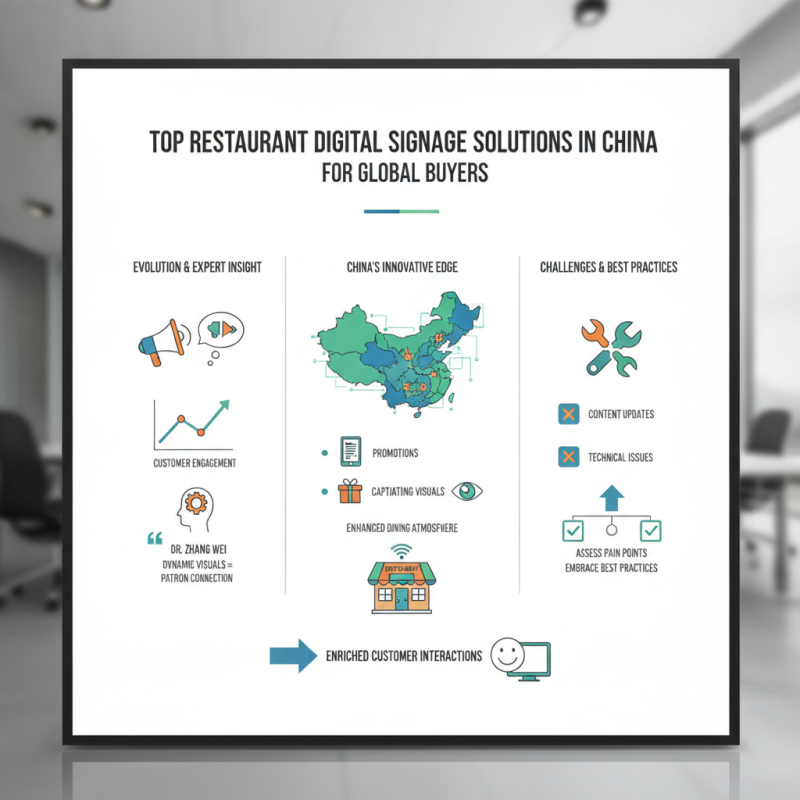
In the rapidly evolving landscape of the restaurant industry, "Restaurant Digital Signage" has become a vital tool for customer engagement. Industry expert Dr. Zhang Wei, a leading authority on digital marketing in the food sector, states, “Effective digital signage can transform not only how restaurants communicate but also how they connect with their patrons.” His insights highlight the significance of dynamic visual content in fostering customer relationships.
As global buyers explore new opportunities, China stands out with its innovative digital signage solutions. Restaurants leverage technology to showcase menus, promotions, and captivating visuals that draw customers in. These displays are not just functional; they create an atmosphere that enhances dining experiences. The shift toward digital communication means restaurants must adapt or risk losing their competitive edge.
However, the implementation of "Restaurant Digital Signage" is not without challenges. Some establishments struggle with content updates, while others face technical issues that hinder effectiveness. A careful assessment of these pain points is essential for success. By embracing best practices and learning from missteps, restaurants can harness the full potential of digital signage, ultimately enriching customer interactions.
As the restaurant industry in China evolves, digital signage is becoming essential. Research indicates that 70% of consumers report being influenced by digital displays. Restaurants leverage this technology to enhance customer engagement. Dynamic menu boards catch attention and promote daily specials effectively.
Recent trends show that the digital signage market in China is expected to grow by 15% annually. Many establishments are investing in interactive displays. These allow customers to browse menus and customize orders. The flexibility of content helps adapt to changing customer preferences quickly. However, not all restaurants maximize this potential. Many struggles with content updates and maintenance, revealing an area for improvement.
Moreover, digital signage can be costly. Initial investments may deter smaller businesses. Effective strategy planning is crucial for a successful implementation. Understanding how to integrate this technology with existing systems remains a challenge. Some establishments report mixed results from their digital signage efforts. The vast potential for targeted marketing may not be fully realized, prompting further reflection on best practices.
In today's competitive restaurant market, effective digital signage plays a crucial role. It captures customer attention and enhances the dining experience. Key features of successful signage include high-quality visuals. Bright, vibrant displays showcase menus and promotions. Dynamic content draws in customers and keeps them engaged. It's not just about aesthetics; clarity is essential. Customers should easily read menu items, prices, and special offers.
Interactivity adds another layer of engagement. Touch screens allow diners to explore menu options or customize their orders. This enhances customer satisfaction and reduces wait times. Timely updates are also crucial. Digital signage should reflect real-time changes in menu items or promotions. This flexibility keeps the content fresh and relevant. However, constant updates can lead to errors. It's vital to have a streamlined process in place.
Moreover, integrating social media feeds can build community connections. Customers love seeing their posts featured. It creates a sense of belonging. Yet, relying solely on user-generated content can be risky. Not every post reflects the restaurant's brand positively. Maintaining a balance is necessary. Investing in quality digital signage can significantly impact customer engagement and sales.
This chart illustrates the popularity of various digital signage features for restaurants, highlighting the essential aspects that global buyers should consider when evaluating signage solutions in China.
In recent years, digital signage has transformed the restaurant industry in China. A report from the Chinese Digital Signage Association indicates that the market is poised for rapid growth, with an expected annual growth rate of over 20% through 2025. This offers ample opportunities for global buyers seeking effective solutions. Key players in the market focus on user-friendly interfaces and high-resolution displays, catering to diverse consumer preferences.
Many Chinese providers boast advanced technologies. These innovations include cloud-based systems and interactive touchscreens. Such features can enhance customer engagement and streamline operations. However, the integration of these tools is not without challenges. Restaurants often face issues with setup and maintenance. A study highlighted that 30% of digital signage users experience difficulties in content management. This points to the need for ongoing support from providers.
The competitive landscape in China encourages innovation but also raises questions about reliability. While many companies promise high-quality service, not all deliver consistently. Buyers should focus on providers with strong client testimonials and proven track records. Assessing long-term partnerships is vital in navigating this dynamic market.
The adoption of digital signage in restaurants has transformed customer engagement in China. A recent report states that nearly 60% of consumers prefer menus displayed on digital screens. This ability to update offerings instantly can enhance customer satisfaction. For instance, a popular restaurant chain improved sales by 30% after implementing dynamic digital menus.
Case studies show varied outcomes. One restaurant noticed increased foot traffic due to vibrant displays showcasing daily specials. However, not all implementations yield success. Some establishments struggled with technical issues, leading to frustrations among both staff and diners. Constant maintenance and content updates are crucial for effective signage.
Moreover, the impact of digital signage on ambiance cannot be underestimated. A study found that 70% of restaurant patrons feel more excited about their dining experience when surrounded by engaging visuals. However, balancing aesthetics and functionality is essential. Striking the right visual appeal can make or break customer perceptions. Hence, restaurant owners must invest time in thoughtful design and regular evaluations to maximize their digital signage benefits.
When selecting a digital signage solution for your restaurant, consider the user experience. Your display should be easy to read and visually appealing. High-resolution images attract attention. Ensure your menu items are showcased with vibrant visuals.
Evaluate the software and platform's flexibility. A good system allows easy updates without technical skills. Look for features like scheduling, real-time updates, and analytics. Understanding customer behavior can guide menu adjustments. This approach enhances engagement and boosts sales.
Cost is a key factor. While advanced systems may offer more features, they also come with higher costs. Assess your budget and consider ROI. Investing in quality can pay off in customer retention. Remember, the right choice should align with your restaurant's identity and goals.
: Digital signage significantly enhances customer engagement, with 70% of consumers influenced by these displays.
Dynamic menu boards attract attention and effectively promote daily specials, making the dining experience more interactive.
Many restaurants struggle with content updates and maintenance, reflecting a need for improvement in these areas.
While effective, the initial costs of digital signage can deter smaller businesses from investing in this technology.
Providing real-time updates on menu items is crucial to keeping content fresh and relevant, but it can lead to potential errors.
High-quality visuals, clarity, interactivity, and timely updates are essential to engage customers effectively.
Integrating social media feeds can build community connections, but not every post represents the restaurant positively.
Nearly 60% of consumers prefer digital screens for menu displays, as they allow instant updates on offerings.
Thoughtful design, regular evaluations, and a streamlined content update process are vital for maximizing digital signage benefits.
Technical issues and constant maintenance challenges can lead to frustration for staff and diners, affecting success rates.
This article explores the growing trend of Restaurant Digital Signage solutions in China, highlighting their importance for global buyers. It begins with an overview of the various digital signage options available in the market, emphasizing key features that make them effective for restaurant environments, such as flexibility, interactivity, and ease of content management.
Furthermore, the article delves into the top digital signage providers in China, presenting case studies that illustrate successful implementations across different restaurant settings. This section serves as an inspirational guide for restaurant owners and managers. Finally, the article concludes with practical tips for selecting the right digital signage solution tailored to specific restaurant needs, ensuring that establishments can effectively engage their customers and enhance their dining experience through innovative visual communication.

Best Display