In 2026, Android Floor Standing Digital Signage is becoming a practical communication tool for retail stores, hotels, hospitals, campuses, and transport venues. These displays do more than play advertisements. They guide visitors, collect feedback, present product information, and support real-time announcements from one central platform.
“Digital signage is not television on a stick,” says Alan Brawn, a recognized digital signage consultant and AV industry educator. His observation remains important. A successful floor-standing display needs suitable hardware, useful content, reliable software, and careful placement. A bright 55-inch portrait screen may attract shoppers near a store entrance. A touch kiosk may help visitors find departments in a crowded building. An outdoor-rated model needs stronger brightness, temperature protection, and weather-resistant construction.
The main types include advertising kiosks, interactive wayfinding terminals, self-service information stands, menu displays, product catalog stations, and modular video wall units. Android systems can simplify content updates, remote monitoring, and integration with cloud-based CMS platforms. However, Android compatibility is not always identical across manufacturers. Some devices offer excellent screens but limited long-term support. Others provide strong remote management but weaker touch performance.
That matters.
This guide examines the leading Android Floor Standing Digital Signage types for 2026. It compares screen size, brightness, touch technology, connectivity, security, mobility, maintenance, and typical installation environments. The “best” type depends on the location, audience, content frequency, and operating budget. A stylish enclosure alone cannot solve poor content design or unreliable network access. Real performance appears after months of daily use, not during a short product demonstration.
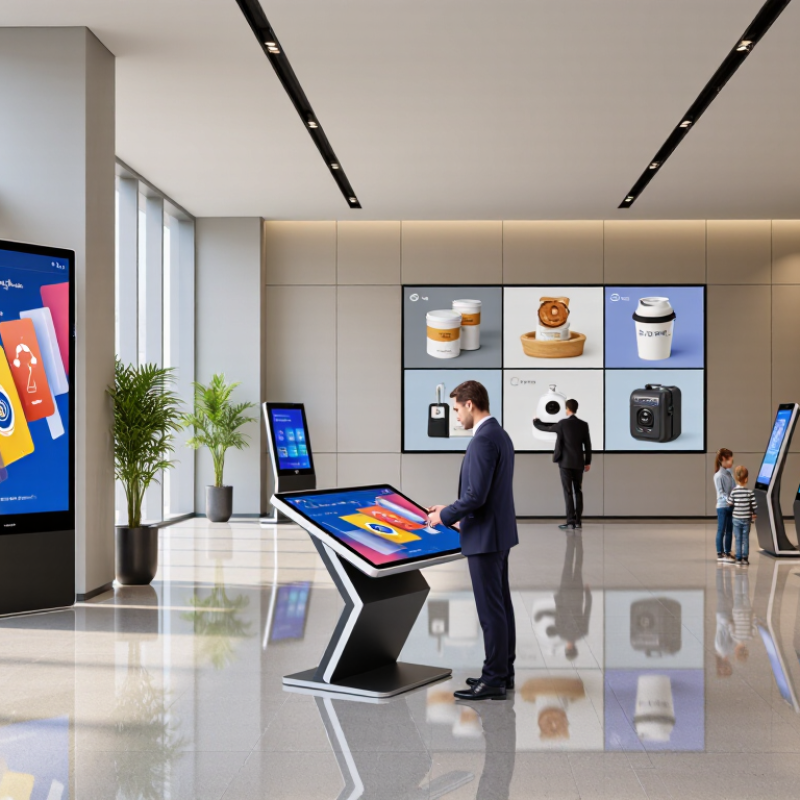
An Android floor-standing digital sign is a self-supporting commercial display. It usually combines a vertical screen, media player, network connection, and remote content management. Touch interaction may be included, but it is not essential. The unit can stand near an entrance, aisle, reception desk, or queue. That physical placement matters. It turns unused floor space into a visible communication point.
For 2026 planning, the category should include retail promotions, hotel directions, campus announcements, healthcare wayfinding, and transport information. It should exclude ordinary consumer tablets and basic poster screens. Using IDC’s commercial-display research approach, market scope should consider hardware, software, connectivity, deployment, and ongoing service. The boundary is not perfectly clean. Some suppliers classify interactive kiosks separately.
Demand is supported by wider signage growth. MarketsandMarkets forecasts the global digital signage market to reach about USD 46.7 billion by 2029, with an 11.3% compound annual growth rate from 2024. Grand View Research projects an 8.1% CAGR through 2030. These figures describe the wider market, not Android floor-standing units alone. That distinction is important.
In practice, buyers will compare screen brightness, operating stability, remote updates, enclosure strength, and energy use. A busy lobby exposes weak thermal design quickly. Android also reduces deployment friction, yet fragmented software quality remains a concern. Cheaper hardware can create expensive maintenance. That deserves closer testing.
Portrait kiosks are becoming practical tools for retail, hospitality, education, and public information.
Their vertical format suits narrow entrances and crowded corridors. A 4K touch display keeps product images, maps, and service menus sharp at close range. The experience feels immediate. However, resolution alone does not guarantee usability. Glare, fingerprints, poor touch calibration, and awkward button placement can quickly frustrate visitors.
Grand View Research values the global digital signage market at about USD 27.1 billion in 2023. It forecasts an 8.1% compound annual growth rate from 2024 to 2030. Fortune Business Insights also expects strong expansion, projecting the market to exceed USD 50 billion by 2032.
These figures support investment, but deployment quality still matters more than impressive specifications. Android Enterprise management can centralize application controls, user permissions, kiosk mode, security updates, and remote diagnostics. Operators can monitor hundreds of portrait screens without visiting each location. That reduces downtime, although network failures and delayed updates remain realistic weaknesses.
Tips: Test touch accuracy with wet and dry fingers. Set readable text sizes. Lock devices to approved applications. Schedule updates outside customer hours. Keep a spare unit nearby. Review screen logs weekly, because “set and forget” is rarely reliable.
2026 Top Android Floor Standing Digital Signage Types
Non-Touch Totems: Digital OOH’s 8.1% CAGR (MarketsandMarkets)
Non-touch Android totems are becoming practical tools for digital out-of-home communication. MarketsandMarkets projects an 8.1% compound annual growth rate for digital OOH. That figure suggests steady demand, not guaranteed success. Location still matters more than screen size.
A floor-standing unit can guide visitors near entrances, transit areas, retail aisles, and reception zones. Its tall display supports clear messages from several meters away. Brightness should match the environment. A dim screen may fail beside a sunlit window. Excessive brightness can feel harsh indoors.
Android-based systems also simplify content scheduling and remote monitoring. Operators can update prices, directions, or public information without visiting every screen. Secure kiosk settings are essential. Regular system updates, restricted permissions, and reliable network controls reduce operational risk. A locked base and hidden cable routing also protect the installation.
Non-touch design has limits. People cannot browse freely or correct misunderstandings on the screen. QR codes, motion prompts, and timed content can create useful alternatives. Still, these features need testing with real viewers. My practical concern is often overlooked: attractive animations may distract from the main message. Clear typography, short playback loops, and readable contrast usually perform better. A totem should inform quickly, even when nobody stops.
| Signage Type | Typical Display Size | Typical Brightness | Resolution | Android Configuration | Operating Environment | Enclosure / Protection | Best-Fit Applications | Key Advantage |
|---|---|---|---|---|---|---|---|---|
| Indoor Standard Totem | 43–55 inches | 350–500 nits | Full HD or 4K UHD | Android 11 or later; Wi-Fi; optional Ethernet | Approx. 0°C to 40°C | Powder-coated metal cabinet; tempered front glass | Retail aisles, reception areas, education, corporate communication | Balanced cost, readability, and simple deployment |
| Large-Format Indoor Totem | 65–86 inches | 400–700 nits | 4K UHD | Android 12 or later; dual-band Wi-Fi; Ethernet; USB media playback | Approx. 0°C to 40°C | Reinforced steel chassis; anti-glare glass option | Shopping centers, transport halls, museums, event venues | High visual impact for long viewing distances |
| High-Brightness Window-Facing Totem | 43–55 inches | 700–1,500 nits | Full HD or 4K UHD | Android 11 or later; remote content management; ambient-light sensor option | Approx. 0°C to 40°C; indoor installation near glass | Anti-glare panel; enhanced thermal management | Storefronts, airport interiors, transit entrances, showroom windows | Improved visibility in bright ambient light |
| Outdoor Weather-Resistant Totem | 43–65 inches | 1,500–3,000 nits | Full HD or 4K UHD | Android 11 or later; 4G/5G option; Ethernet; remote monitoring | Typical range of approximately −20°C to 50°C, depending on thermal design | IP-rated enclosure; UV-resistant glass; active cooling or heating | Outdoor retail, campuses, public spaces, stadium approaches | Designed for sunlight, dust, moisture, and temperature variation |
| Dual-Sided Totem | Two displays, typically 43–55 inches per side | 500–1,500 nits per display | Full HD or 4K UHD per display | Android 11 or later; synchronized playback; Wi-Fi or Ethernet | Indoor or sheltered outdoor areas | Back-to-back cabinet; reinforced base; cable-management system | Walkways, transit platforms, shopping malls, building entrances | Communicates with viewers moving in opposite directions |
| Portrait Advertising Totem | 43–65 inches | 500–1,000 nits | Full HD or 4K UHD | Android 11 or later; scheduled playlists; cloud CMS compatibility | Indoor or covered semi-outdoor locations | Slim portrait chassis; anti-glare glass; lockable rear service panel | Digital OOH advertising, promotions, venue messaging | Efficient use of vertical creative and limited floor space |
| Wayfinding and Information Totem | 43–55 inches | 400–800 nits | Full HD or 4K UHD | Android 11 or later; network access; API or CMS integration | Approx. 0°C to 40°C | Vandal-resistant glass option; stable anti-tip base | Hospitals, campuses, hotels, government facilities | Supports frequently updated directional and informational content |
| Menu and Queue Display Totem | 32–55 inches | 350–700 nits | Full HD or 4K UHD | Android 11 or later; cloud CMS; optional printer or POS integration | Approx. 0°C to 40°C | Commercial-grade enclosure; easy-access service design | Quick-service restaurants, food courts, clinics, service counters | Enables real-time menu, queue, pricing, and promotional updates |
Interactive wayfinding kiosks are becoming practical tools for airports, hospitals, campuses, and retail complexes. MarketsandMarkets estimates the global digital signage market will grow from USD 27.1 billion in 2024 to USD 46.7 billion by 2029. Android floor standing displays support this growth with flexible apps, touch navigation, and centralized content management.
QR codes create a quick bridge between physical signage and personal phones. Visitors can scan a route, building map, accessibility option, or event schedule. Juniper Research has projected more than 2.2 billion QR code users worldwide by 2025. NFC adds a faster tap-based interaction. It can open directions, visitor information, or multilingual content without requiring camera alignment. Small details matter. Place the NFC area near eye level and label it clearly.
A reliable kiosk needs more than a bright screen. A 24/7 CMS should schedule updates, monitor device status, and publish emergency content remotely. It should also cache maps when networks fail. That weakness is often ignored. In practical deployments, poor Wi-Fi can make an advanced kiosk look broken. Choose industrial cooling, automatic restart, strong screen visibility, and Android security controls. Accessibility needs attention too, including readable contrast, reachable interaction zones, audio guidance, and large touch targets. Reports from the Digital Signage Federation emphasize operational reliability, but real sites still require regular testing and human review.
Outdoor smart totems are becoming practical tools for busy sidewalks, transit areas, campuses, and retail entrances. Grand View Research estimates the global digital signage market reached approximately USD 27.1 billion in 2024, with continued growth expected through 2030. Outdoor demand follows this expansion, but sunlight remains unforgiving.
A 1,500-plus-nit display keeps maps, menus, and announcements visible under direct daylight. Higher brightness is useful. It also creates more heat. Engineers should check thermal derating, ventilation, and automatic brightness control before installation. A 24/7 duty rating requires commercial-grade power supplies, stable cooling, and remote health monitoring. Small failures become expensive when a screen operates overnight.
IP65 protection, defined under IEC 60529, means the enclosure is dust-tight and protected against water jets. It does not mean safe immersion. That distinction matters after heavy rain or pressure washing. Outdoor Advertising Association research has reported that digital out-of-home media reaches a large majority of adults monthly, showing why uptime and readability directly affect campaign value. Still, a specification can look stronger than a real sidewalk. Reflections, vandal-resistant glass, winter condensation, and poor cable sealing may reduce performance. Field testing at noon and during storms remains essential.
It is a floor-standing digital display for public information. It can show directions, prices, schedules, or announcements. People view content without touching the screen.
They work near entrances, transit areas, reception zones, and retail aisles. A tall screen remains visible from several meters away. Location often matters more than screen size.
They can show maps, arrows, timed messages, and short instructions. QR codes can open routes or schedules on personal phones. Motion prompts may attract attention, but they need real-world testing.
Visitors cannot freely browse or correct misunderstandings. A QR code provides another path, but not everyone will scan it. Clear messages matter more than flashy animation.
Staff can update prices, directions, and public information remotely. The system can schedule content and monitor device status. Offline caching helps when the network fails.
It should handle dust, water jets, sunlight, heat, and long operating hours. IP65 protects against dust and water jets, not immersion. Heavy rain still deserves caution.
A display above 1,500 nits can remain readable in direct daylight. More brightness also creates more heat. Automatic brightness control and thermal testing are important.
Use restricted permissions, regular updates, protected cable routing, and a locked base. Remote health monitoring can identify failures overnight. Real sites still need human checks.
Use strong contrast, large text, reachable touch areas, and audio guidance when appropriate. Place NFC or scan areas near eye level. Some layouts may look attractive but remain difficult to use.
Android Floor Standing Digital Signage is becoming a versatile solution for retail, transportation, hospitality, education, and public information environments in 2026. These systems combine vertical displays, Android-based software, and flexible content management to deliver clear, accessible, and frequently updated messages. Portrait kiosks can provide 4K visuals, touch interaction, and centralized Android enterprise management, while non-touch totems support reliable digital out-of-home communication and efficient advertising operations.
Interactive wayfinding kiosks add practical features such as QR codes, NFC, and continuous CMS connectivity, helping visitors find destinations, access information, or connect with digital services. For outdoor installations, smart totems are designed for demanding conditions with IP65 protection, brightness above 1,500 nits, and 24/7 operating capability. Together, these formats represent a scalable signage category that balances durability, interactivity, remote control, and strong visual performance across indoor and outdoor applications.

Best Display